Every spring and again every fall, double-coated dogs around Clover go through the same event: the dense undercoat that insulated them lets go in tufts, and suddenly there is hair on the floors, the furniture, and every item of clothing you own. Owners call it blowing coat. It is driven mostly by changing daylight length, with temperature helping it along, and for a healthy dog it is completely normal.
The useful skill is telling a normal coat blow from shedding that signals a problem. The checklist below works through it in order: what you should see in a normal seasonal shed, and the fail signs that mean the answer is a vet visit rather than another brushing session.
What a normal coat blow looks like
Undercoat comes out in soft clumps, often unevenly, heavier over the hips, chest, and neck. The skin underneath looks normal, the dog acts like itself, and within a few weeks the new coat is visibly coming in. Dogs kept mostly indoors shed more evenly across the year because artificial light blurs the daylight signal, but most still show a clear spring and fall peak. Brushing during the peak does not cause the shed; it simply collects hair on your brush instead of your sofa.
The coat-blow check, in order
- Timing: Pass if the heavy shedding lines up with spring or fall. Fail if a sudden heavy shed starts out of season or right after a food change, new medication, or illness.
- Skin underneath: Pass if the skin looks pale, calm, and clean as hair comes out. Fail if you see redness, scabs, flaking patches, or a sour smell.
- Pattern: Pass if hair comes out fairly evenly in tufts of undercoat. Fail if there are bald patches, thinning in distinct spots, or hair breaking off at one length.
- Itch level: Pass if the dog is no itchier than usual. Fail if scratching, chewing at the feet, or ear shaking ramps up with the shedding, which points to allergies or parasites.
- Coat coming in: Pass if new growth is visible within a few weeks. Fail if the coat keeps thinning with nothing replacing it.
- The dog overall: Pass if appetite, energy, and weight are steady. Fail if the shed arrives with lethargy, weight gain, or drinking much more than usual.
What actually helps during the peak
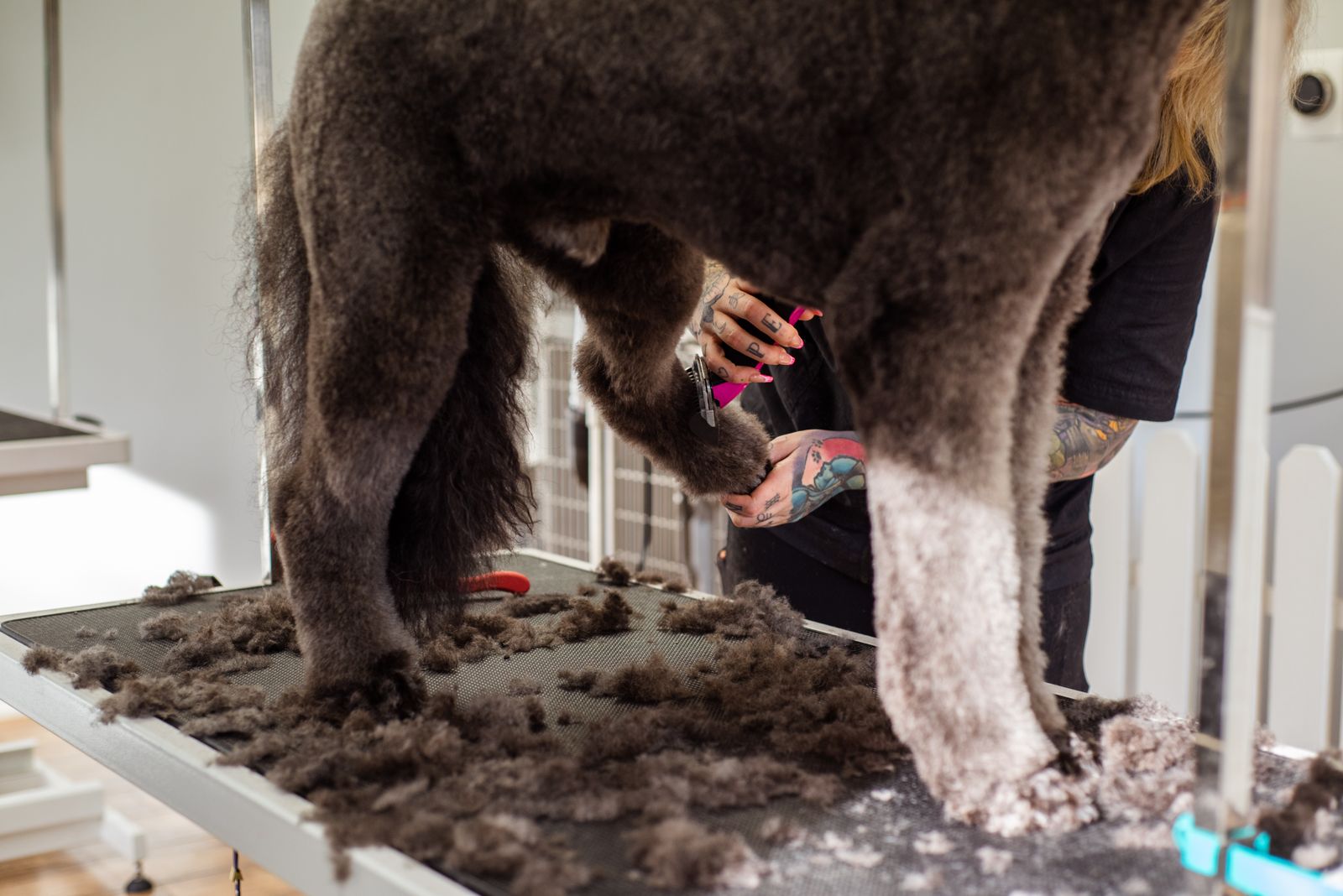
Frequent short brushing sessions beat one long one. During the heaviest two or three weeks, a slicker brush and comb session every other day keeps up with the release, and a bath helps loosen undercoat that is ready to go, as long as the dog is dried fully and brushed out after. This is also the season when professional de-shedding baths earn their keep for heavy double coats, because a high-velocity dryer lifts out undercoat that home tools take hours to reach.
What does not help is shaving the dog down. The undercoat and topcoat grow back at different rates, the topcoat can return slowly or unevenly, and the dog loses the insulation layer that also shields skin from sun. Shedding is the coat working as designed; the job is to manage the hair, not remove the system.
When heavy shedding means the vet
Book the veterinarian when the checklist turns up fail signs: bald patches, inflamed or flaky skin, a strong odor, intense itching, or shedding paired with changes in energy, appetite, or weight. Thyroid problems, allergies, skin infections, and parasites all present partly through the coat, and none of them respond to brushing. Bring notes on when the shedding started and what changed around the same time, because that timeline is the most useful thing you can hand a vet.

For the normal case, which is most dogs in Clover most years, the routine is simple: brush often during the peak, bathe and dry thoroughly, feed the usual diet, and let the season run its course. If you are unsure which side of the line your dog is on, the staff at Animal Supply House can look at the coat with you and help you decide whether it is a grooming answer or a vet answer.
Common questions
How long does a coat blow last?
Typically two to four weeks of heavy release, tapering as the new coat fills in. Brushing and a bath with a full dry can shorten the messy phase.
Does brushing more make a dog shed more?
No. The hair coming out was already released by the follicle. Brushing just decides whether it lands on your brush or your furniture.
Should I change my dog's food during shedding season?
Not for a normal seasonal shed. Steady, complete nutrition supports coat growth, but sudden food changes add digestive upset without changing the shedding cycle.
Photos in this guide are representative stock images.
← All guides from Animal Supply House← Back to Animal Supply House