Dog paw pads are thick, callused skin built for rough ground, and most of the time they handle Clover sidewalks, trails, and yards without any help. The two exceptions come with the seasons. Summer pavement in South Carolina can get hot enough to burn pads on an ordinary afternoon walk, and winter brings road salt and ice melt that dry, crack, and sting. Both problems are easy to prevent once you know the checks.
This is a practical routine: what you can do at home in minutes, and the clear line where a paw problem stops being home care and becomes a vet or groomer visit.
The pavement problem
Asphalt absorbs heat all day and can run far hotter than the air temperature, especially in mid-afternoon. Dogs do not always limp or complain at first; they keep walking, and the burn shows up later as licking, tenderness, or pads that look blistered or start to peel. Grass and shaded dirt stay much cooler, which is why route choice matters as much as timing on hot days.
- Do the seven-second test. Press the back of your hand to the pavement and hold it there. If you cannot keep it down comfortably for seven seconds, the surface is too hot for pads.
- Shift the schedule. Walk early in the morning or after sunset in the summer months, and favor grass, dirt paths, and shaded routes at midday.
- Inspect after the walk. Look between the toes and across the pads for redness, small cuts, stuck grit, or a pad that feels tender when pressed gently.
- Rinse and dry. A quick rinse removes hot grit and, in winter, salt residue. Dry between the toes, because trapped moisture there invites irritation and yeast.
- Apply pad balm to dry or rough pads. A thin layer of a dog-safe balm softens callused pads and adds a light barrier before walks on salted surfaces. Rub it in so the dog does not track it across the floor.
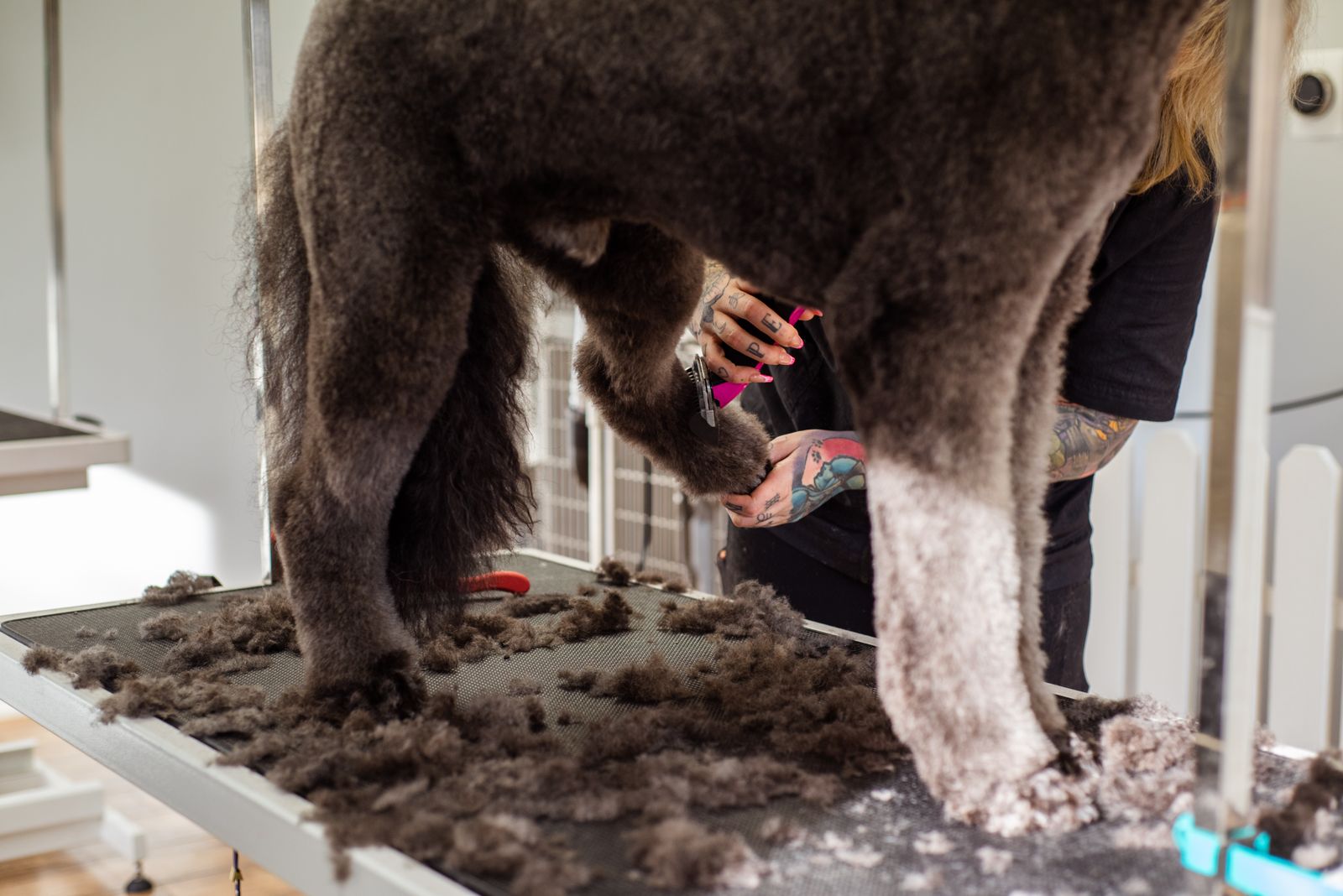
- Trim the hair between the pads. Short hair between the toes collects less mud, fewer burrs, and less ice and salt. This is a careful job near skin folds, and many owners hand it to a groomer.

Winter salt and ice melt
The Piedmont sees fewer salted roads than the mountains, but bridges, parking lots, and storefront sidewalks around Clover get treated during ice events, and that is exactly where dogs walk. Salt dries pads out and stings any small crack, and dogs then lick it off, which can upset the stomach. The fix is simple: rinse or wipe paws when you come in from treated surfaces, every time, for as long as the residue is down.
Booties are the other option, and some dogs accept them after a few short indoor practice sessions with treats. A dog that hates booties is better served by the rinse-and-balm routine done consistently than by a fight at the front door. Watch also for ice balls forming between the toes of long-haired dogs on the rare snowy days; they pull and hurt, and they melt out quickly in warm water.
Everyday pad health
Nails belong in paw care too. Nails that grow long change how the foot lands, push the toes apart, and make pads take uneven wear. If you hear clicking on hard floors, the nails are due. Walking regularly on pavement files nails slightly but rarely keeps them short enough on its own, so trims every few weeks are the norm.
Where the professional line is
See a veterinarian for a pad that is cut deeply, bleeding that does not stop with gentle pressure, a blister or burn that the dog will not bear weight on, swelling between the toes, or limping that lasts beyond a day. A widespread myth is that dogs licking a wound keeps it clean; licking actually delays healing and introduces bacteria, so a sore paw that gets licked constantly needs a barrier and often a vet's look.
Groomers handle the maintenance side: nail trims, hair between the pads, and spotting early trouble during baths. Staff at Animal Supply House in Clover can also help you pick a balm or booties that fit your dog's feet rather than a generic size. Pads heal slowly because dogs walk on them, so prevention, the hand test, the rinse, and the quick post-walk look, is worth far more than treatment.
Common questions
How can I tell if the pavement is too hot?
Use the back of your hand. If you cannot hold it on the asphalt comfortably for seven seconds, walk on grass or wait for a cooler part of the day.
Is pad balm safe if my dog licks it?
Dog-specific balms are made with licking in mind, but apply a thin layer and let it soak in. Never use human products with ingredients you have not checked for dogs.
Do dogs really need paw rinses after winter walks?
Yes, when surfaces have been salted. Salt residue dries and cracks pads and upsets stomachs when licked off, and a thirty-second rinse prevents both.
Photos in this guide are representative stock images.
← All guides from Animal Supply House← Back to Animal Supply House