It usually happens after dark. Your dog comes to the door in Clover with watering eyes, a frantic need to rub its face on the ground, and a smell so strong it seems to fill the whole house at once. Skunk spray is an oily, sulfur-based secretion, and that oil is the whole problem: it clings to coat, skin, collars, and anything the dog touches, and it does not rinse away with plain water.
The good news is that the chemistry to break it down is simple and probably already in your house. The bad news is that waiting makes everything harder. Here is what to do first, what to skip, and how to tell when the job belongs to a groomer or a veterinarian instead.
Why waiting costs you
Fresh skunk spray sits on top of the coat. Given time, the oil works down to the skin, soaks into leather collars and fabric, and spreads to carpets, car seats, and furniture every time the dog shakes or rubs. A dog treated within the first hour usually needs one good wash. A dog treated the next morning often needs two or three, and the smell can reactivate for weeks whenever the coat gets wet.
Waiting has a second cost. Dogs sprayed in the face may have irritated eyes, and a dog that took a close-range blast sometimes vomits or drools from the taste. Those are reasons to call a veterinarian promptly, not to start with a bath. Check the eyes first: redness, squinting, or pawing at the face means a vet call before any washing.
The wash that actually works
The standard deskunking mixture is one quart of 3 percent hydrogen peroxide, a quarter cup of baking soda, and a teaspoon or two of liquid dish soap. The peroxide and baking soda react with the sulfur compounds and neutralize the odor instead of covering it, while the soap cuts the oil so the mixture can reach it. Mix it fresh in an open bucket, because the reaction releases gas and a sealed container can burst.
Work it into the dry coat, avoiding the eyes, and let it sit for about five to ten minutes. Rinse thoroughly, then follow with a regular dog shampoo wash and another full rinse. Keep the dog outside or in a garage or tub area until the wash is done, because every surface touched before the bath joins the cleanup list. Throw away cloth collars if you can; the oil bonds to fabric in a way that survives many washings, and leather is nearly as stubborn.
What not to do
Tomato juice is the famous remedy, and it mostly works by overwhelming your nose rather than removing the spray. After a tomato juice bath, the person smells tomato; the dog still smells like skunk, and now also like tomato. Scented shampoos have the same flaw at smaller scale: perfume layered over sulfur oil fades in hours, and the skunk smell comes back.
Do not use bleach, ammonia-based cleaners, or human hair products on a dog. Do not use a peroxide mixture stronger than the standard drugstore strength, and never use it near the eyes. And do not let a sprayed dog sleep it off inside overnight in the hope that the smell will fade on its own. It fades into the upholstery instead.
When to hand it off
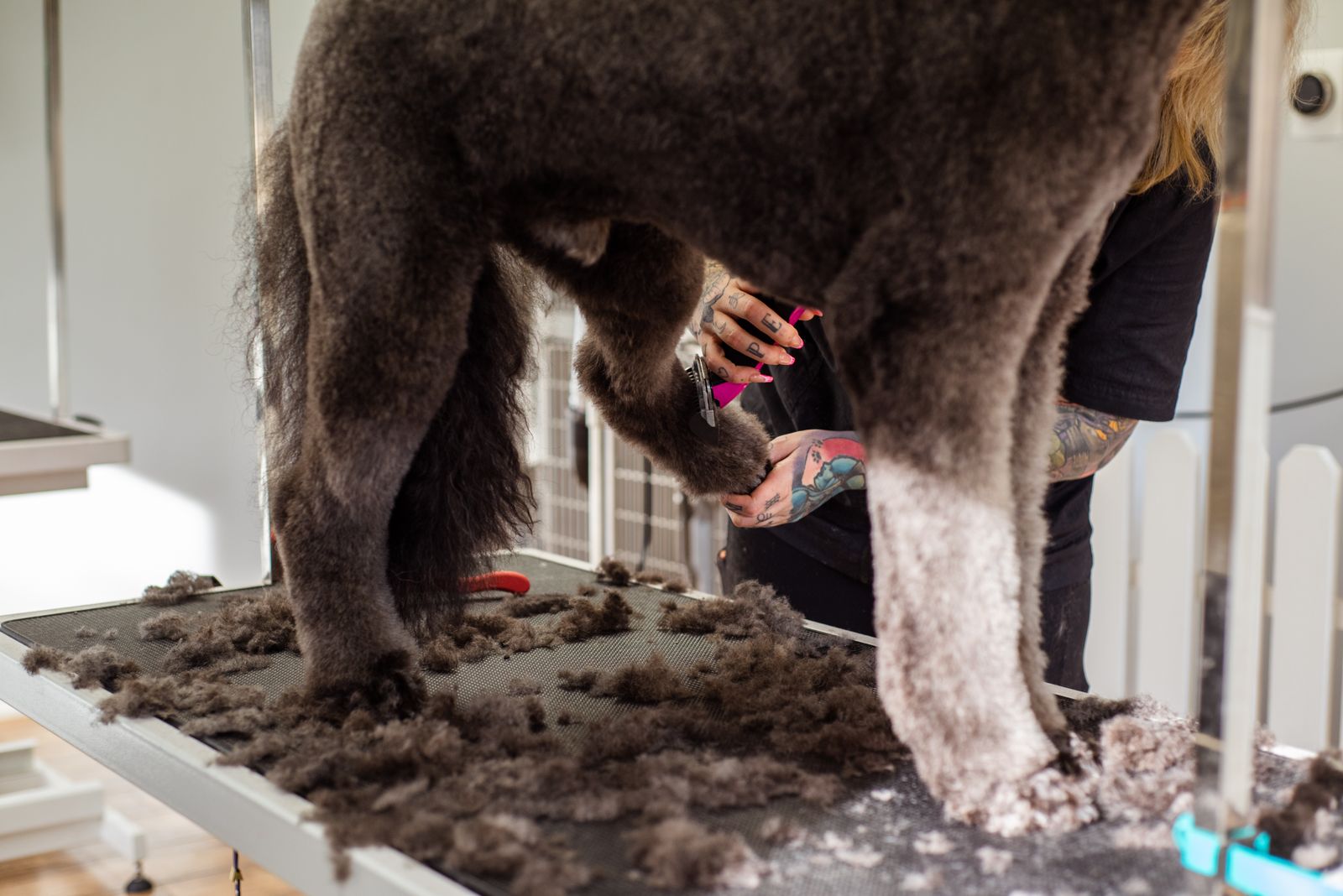
A groomer earns the call when the coat is long, thick, or double, because spray buried under a dense undercoat is hard to reach at home, and a professional bath, blow-out, and trim can remove the worst of the contaminated outer coat. Hand it off as well when the first wash helps but a stubborn smell remains around the face and chest, where home washing is hardest to do safely.
A veterinarian is the call for eye irritation, vomiting, drooling, pale gums, or a dog that seems weak or disoriented. Skunk spray in the eyes is painful, and in rare cases a heavy facial spray affects red blood cells. Those signs outrank the smell every time. Once the dog is clean and settled, a quick note of where the encounter happened helps you change the evening routine, since skunks revisit the same yards and fence lines around Clover all season. If you need supplies or a professional wash, Animal Supply House is a sensible first stop for Clover pet owners working through the aftermath.
Common questions
Does tomato juice remove skunk smell?
Not really. It masks the odor briefly through smell fatigue, but the spray oil stays in the coat. The peroxide, baking soda, and dish soap mixture neutralizes the sulfur compounds instead.
Can I mix the deskunking wash ahead of time?
No. The mixture reacts and releases gas, so it must be made fresh in an open container and used right away. Never store it in a sealed bottle.
How long will the smell last if I do nothing?
The worst of it fades over days, but the oil can linger in the coat for weeks and turn noticeable again whenever the dog gets wet. Washing early is far easier than washing late.
Photos in this guide are representative stock images.
← All guides from Animal Supply House← Back to Animal Supply House