Most home brushing fails for one of two reasons: the brush does not match the coat, or the session lasts so long that the dog learns to dread it. If you have never brushed your dog with any real plan, start smaller than you think. Five calm minutes with the right tool, done regularly, will prevent most of the mats and shedding mess that send dogs to the groomer in rough shape.
This walkthrough is written for a true first-timer in Clover: what to buy, how to hold the brush, and how the routine changes depending on whether your dog is smooth, double-coated, curly, or long and silky.
Match the tool to the coat
A slicker brush, with its fine bent wire pins, is the workhorse for curly, wavy, and medium-to-long coats. It pulls loose hair out and separates strands so tangles show up early. A pin brush, with straight pins set in a cushion, suits long silky coats because it glides without snapping fragile hair. A steel comb is not optional equipment: it is the test. If the comb passes through the coat down to the skin, the brushing actually worked. If it snags, there is a tangle the brush slid over.
Smooth, short coats need the least: a rubber curry brush or bristle brush lifts loose hair and spreads skin oils, and that is genuinely enough. Double coats, the thick two-layer coats on many herding and spitz-type dogs, need a slicker and a comb, worked in sections. One caution that surprises people: shaving a double coat does not stop shedding and can damage how the coat grows back, so brushing is the real answer for those dogs.
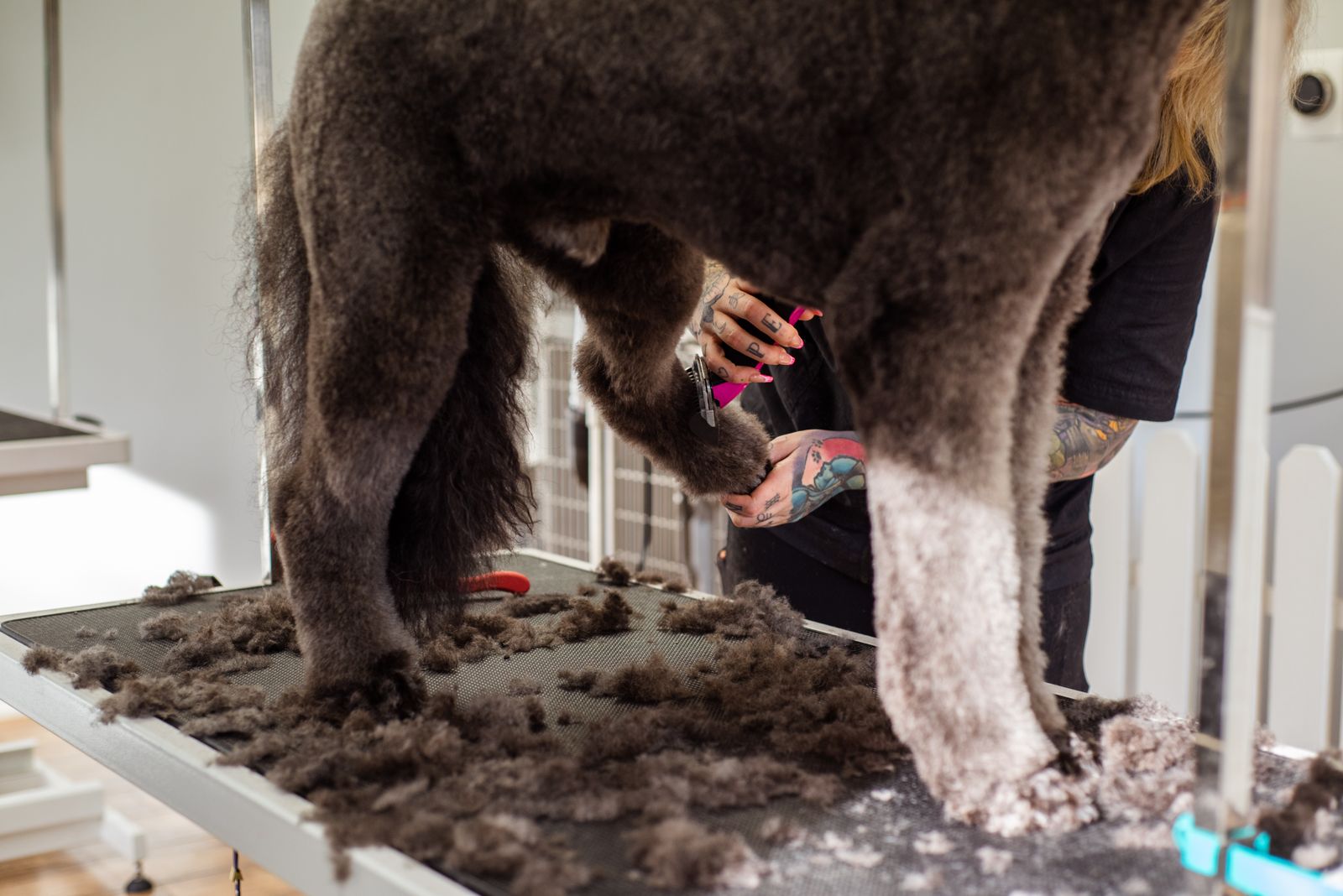
Your first session, step by step
- Pick a calm moment. Start after a walk or play session, not when the dog is wound up. Keep the first session to five minutes even if it goes well.
- Start where the dog likes being touched. Brush the back and sides first with light strokes. Save the armpits, belly, and behind the ears for later sessions; those areas mat fastest and are the most sensitive.
- Brush in layers. For longer coats, lift a section of hair and brush from the skin outward in small strokes, working line by line. This is called line brushing, and it is the difference between smoothing the surface and actually clearing the coat.
- Run the comb test. Follow the brush with the steel comb. Where it glides, you are done. Where it catches, hold the base of the tangle with your fingers so it does not pull the skin, and pick it apart gently with the comb's end teeth.
- Check the friction spots. Run your fingers through the armpits, the collar line, behind the ears, and the feathering on the legs. A tangle found at pea size takes seconds to fix; the same tangle in three weeks is a mat.
- End on a win. Stop while the dog is still relaxed, and pair the finish with a treat or a favorite game. The goal of the first weeks is a dog that hears the brush drawer and comes over willingly.
How often, honestly
Curly and long coats do best with a short session every two or three days, because their hair catches and holds shed strands instead of dropping them. Double coats manage well with a weekly session, plus extra during the spring and fall shedding peaks. Smooth coats need only a weekly once-over. The pattern matters more than the minutes: frequent and brief beats rare and heroic, for the coat and for the dog's patience.

When a tangle becomes a groomer's job
A mat that sits tight against the skin, covers a wide area, or makes the dog flinch should not be worked on at home. Pulling at a tight mat hurts and can tear skin that is already irritated underneath, and scissors near a mat are a common cause of cuts, because the mat pulls skin up into itself. Groomers remove those safely with clippers. Bringing a dog to Animal Supply House in Clover with a few honest mats is normal and fixable; bringing one in fully pelted means a short clip is the only kind option, so the five-minute routine is what protects the coat your dog actually wears.
Common questions
Which brush should a beginner buy first?
For most medium and long coats, a slicker brush plus a steel comb covers nearly everything. Add a rubber curry brush for short, smooth coats.
Why does the comb snag right after I brushed?
The brush smoothed the top layer while a tangle stayed near the skin. Work in layers from the skin outward, and let the comb be the final check every time.
How do I keep my dog from fighting the brush?
Shorten the sessions, start in spots the dog enjoys, and stop before the dog gets restless. Most resistance is about sore pulling on tangles, so gentle technique and frequent short sessions fix it.
Photos in this guide are representative stock images.
← All guides from Animal Supply House← Back to Animal Supply House